
01 Jun A Step-by-Step Guide to Buying Melbourne Property Through an SMSF
Investing in Melbourne property through a Self Managed Super Fund (SMSF) has become an option many Australians consider when building long term retirement wealth. However, SMSF property purchases involve strict regulations, lending requirements, and compliance obligations that differ from traditional property investment.
Whether you are based in Sydney or planning to invest in Melbourne’s property market, understanding the process can help you make informed decisions. Here is a complete step by step guide to buying Melbourne property through an SMSF.
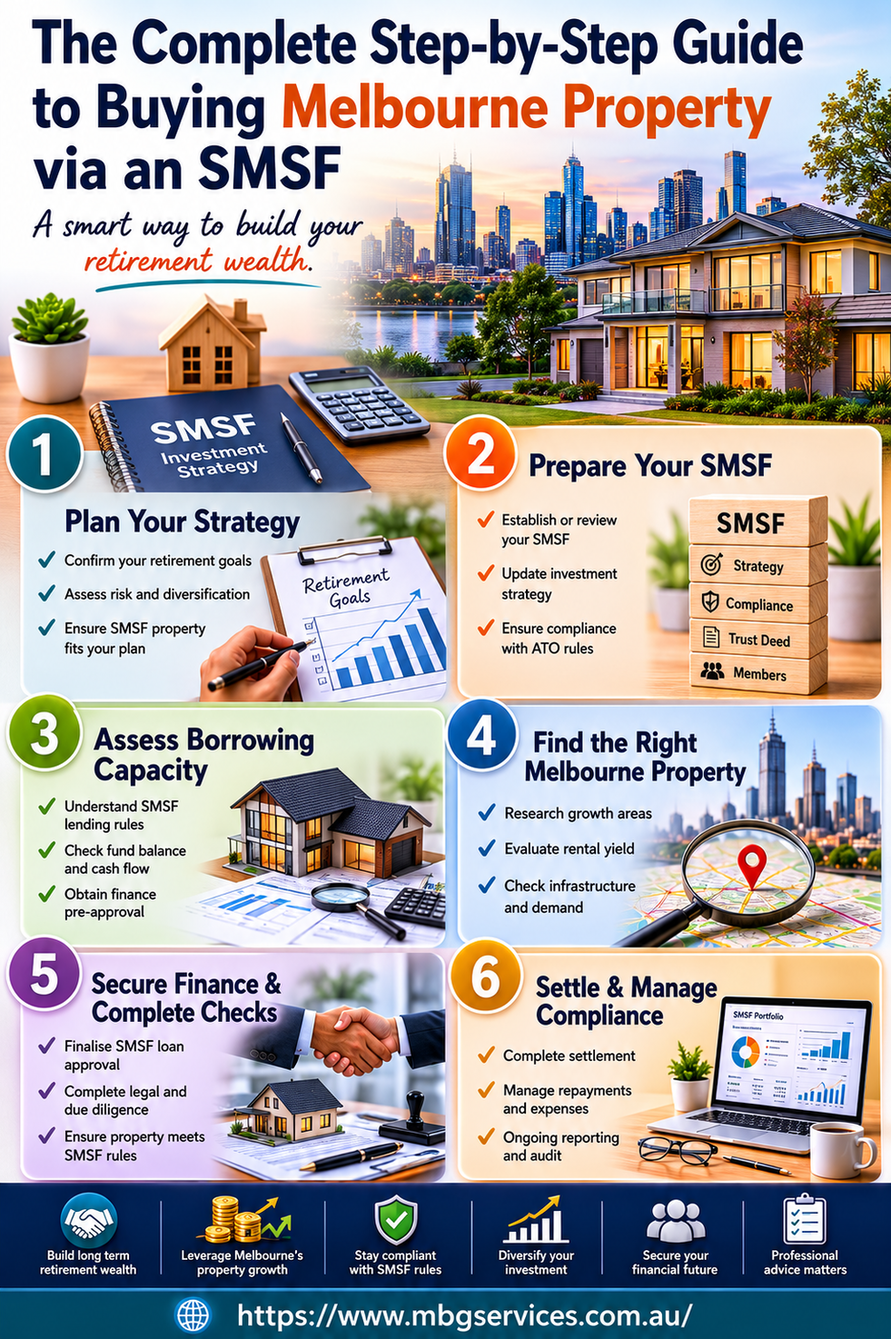
Step 1: Confirm Whether an SMSF Property Strategy Suits Your Goals
Before purchasing any property, review whether investing through an SMSF aligns with your retirement objectives, risk tolerance, and financial position.
Questions to consider include:
- Does your SMSF have sufficient funds?
- Will property diversification strengthen your investment strategy?
- Can your fund manage ongoing expenses?
- Does the investment meet long term retirement goals?
Seeking professional advice at this stage is often important, especially if you are planning to apply for SMSF loans in Melbourne.
Step 2: Establish or Review Your SMSF Structure
If you do not already have an SMSF, you will need to establish one according to Australian regulations. Existing SMSFs should review trust deeds and investment strategies before proceeding.
Your SMSF investment strategy should clearly support property investment decisions and demonstrate compliance with regulatory requirements.
Step 3: Assess Borrowing Capacity
Many SMSFs use borrowing arrangements to purchase property. Borrowing structures for SMSFs differ from standard home loans and often involve stricter lending criteria.
Lenders typically assess:
- SMSF balance
- Contribution history
- Fund liquidity
- Existing assets
- Member circumstances
Understanding borrowing capacity early helps narrow property options.
Step 4: Obtain Specialist Advice
SMSF property investment involves legal, financial, taxation, and compliance considerations. Engaging professionals experienced with SMSF lending and property investment may help reduce risks.
Professional guidance can assist with:
- SMSF compliance
- Loan structures
- Tax implications
- Property selection
- Documentation requirements
Step 5: Identify Suitable Melbourne Investment Properties
Melbourne offers diverse property markets with varying growth potential. Property selection should focus on long term investment objectives rather than short term trends.
Factors to evaluate include:
- Location demand
- Infrastructure developments
- Rental yield potential
- Vacancy rates
- Future growth prospects
Research remains critical before committing funds.
Step 6: Ensure the Property Meets SMSF Rules
SMSFs must comply with strict investment regulations. For example, residential properties purchased through an SMSF generally cannot be occupied by members or related parties.
The investment must satisfy the sole purpose test, meaning it exists primarily to provide retirement benefits.
Failure to comply may result in serious consequences.
Step 7: Secure SMSF Finance Approval
Once an appropriate property is identified, obtaining finance approval becomes the next step. SMSF property loans in Melbourne usually involve additional documentation and longer assessment periods compared with traditional loans.
Preparation can improve efficiency during approval processes.
Step 8: Complete Legal and Due Diligence Checks
Before purchasing, undertake detailed due diligence including:
Contract reviews
Building inspections
Title searches
Legal checks
Financial assessments
Careful investigation helps identify risks before settlement.
Step 9: Finalise the Purchase Through the SMSF Structure
The property purchase must occur in the correct legal structure required for SMSF borrowing arrangements. Errors during this stage may create compliance complications later.
Professional oversight is often valuable.
Step 10: Manage Ongoing Compliance and Property Obligations
Buying the property is only the beginning. SMSF trustees remain responsible for:
- Annual reporting
- Audit requirements
- Loan repayments
- Property maintenance
- Investment strategy reviews
Ongoing compliance supports long term investment success.
Conclusion: What to Consider
Buying Melbourne property through an SMSF can offer investment opportunities, but the process requires careful planning, regulatory understanding, and expert guidance. Whether investing from Sydney or locally within Melbourne, taking a structured approach can help support informed decisions and long term retirement objectives.
Make an Appointment With Us
To get consultation regarding SMSF, feel free to connect with MBG Services today. Call 03 9492 4860 to make an appointment today.
Frequently Asked Questions of SMSF
- How does purchasing property through an SMSF differ from buying an investment property personally?
- Can an SMSF purchase property in Melbourne if the fund members live in Sydney?
- Why is liquidity important when buying property through an SMSF?
- Can an SMSF invest in both residential and commercial property?
- What happens if an SMSF property no longer aligns with the fund’s investment strategy?
- Why are SMSF loan approvals often more complex than standard property loans?
- How important is location research when selecting Melbourne property for an SMSF?
- Can renovation plans affect SMSF property compliance?
- What are common mistakes first time SMSF property investors make?
- Why should SMSF trustees regularly review property performance after purchase?